Nose Reshaping – Rhinoplasty
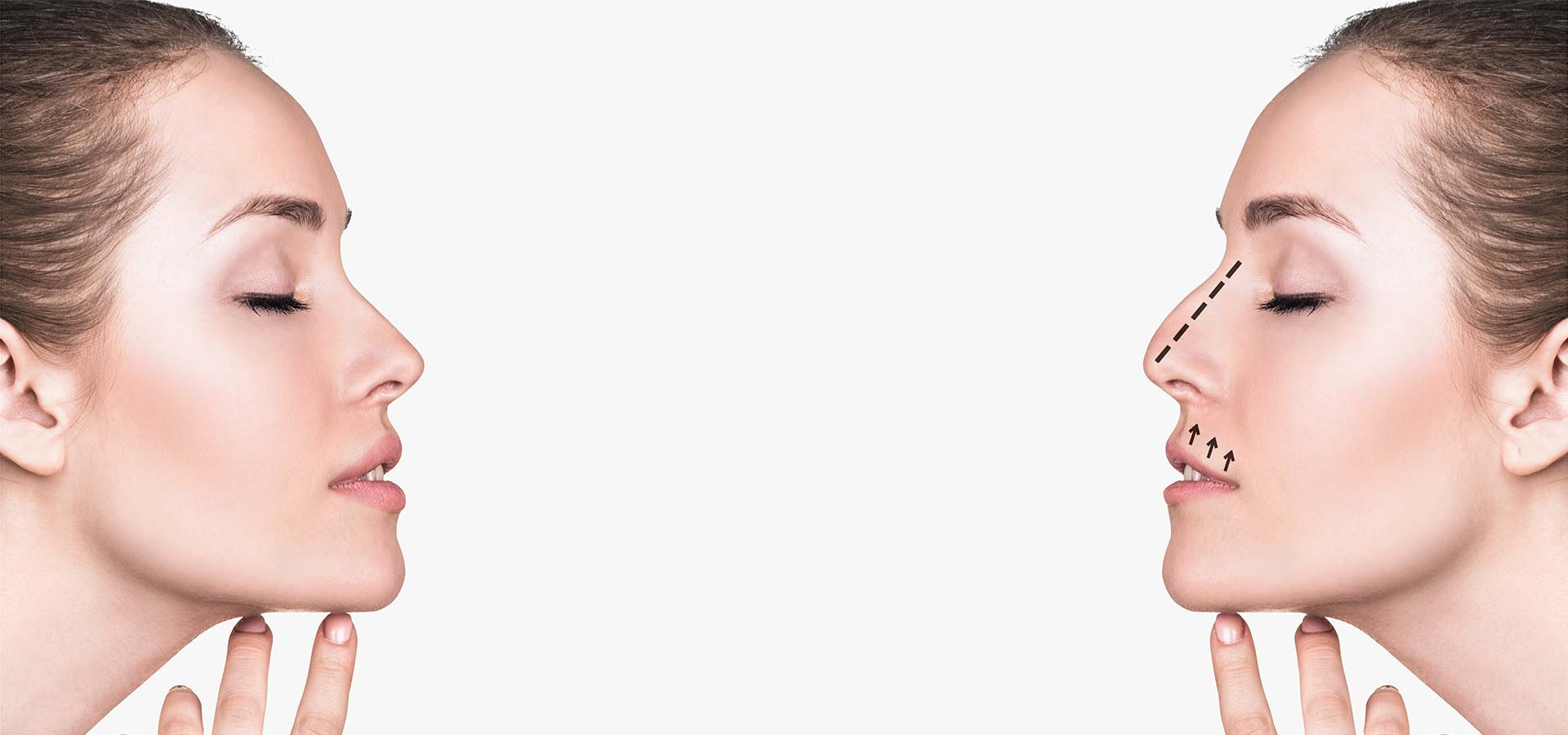
Rhinoplasty is the most-requested cosmetic surgery worldwide — and for good reason. The nose sits at the visual center of the face, and even subtle changes to its size, shape, or proportion can transform how the entire face appears. But rhinoplasty is also one of the most technically demanding procedures in facial plastic surgery, addressing a wider range of distinct concerns than nearly any other cosmetic operation. The same surgical category encompasses everything from refining a dorsal hump to correcting a crooked nose, narrowing wide nostrils, restoring a depressed bridge, and rebuilding nasal structure after trauma or previous unsatisfactory surgery — each requiring different techniques, different surgical planning, and different expectations.
Rhinoplasty addresses a wider range of distinct concerns than any other cosmetic procedure — from dorsal humps and wide tips to crooked alignment, asymmetric nostrils, and the breathing and nasal function issues that exist beneath nearly every cosmetic concern. Dr. Maurice Khosh’s published research and three decades of rhinoplasty experience cover this full spectrum. Author of “Surgical Management of Nasal Valve Obstruction” in the Archives of Facial Plastic Surgery and “Unilateral Nasal Obstruction” in Greenwich Medical Publications, Dr. Khosh is dual board-certified by the American Board of Facial Plastic and Reconstructive Surgery and the American Board of Otolaryngology–Head and Neck Surgery. A Fellow of the American College of Surgeons (FACS), he has been recognized as a perennial Castle Connolly Top Doctor, a Best Doctors in America honoree, and a New York Magazine Best Doctor in Facial Plastic Surgery.
What Would You Like to Improve About Your Nose?
The most useful first step in considering rhinoplasty is identifying which specific aspect of your nose you would like to address. Dr. Khosh treats the full range of nasal concerns:
Understanding Rhinoplasty: Aesthetic and Functional Considerations
The most important conceptual point about rhinoplasty is that the nose is not just an aesthetic feature — it is a functional anatomical structure that must work correctly for normal breathing, sinus drainage, and protection of the internal nasal passages. Many patients arrive at consultation focused entirely on how their nose looks, only to learn during evaluation that pre-existing functional issues are also present — a deviated septum, nasal valve collapse, turbinate enlargement, or other internal anatomy variations that affect breathing. A properly planned rhinoplasty addresses both dimensions:
- The Aesthetic Goal: Reshaping the visible external structure to produce the proportion and contour the patient wants
- The Functional Goal: Preserving or improving how the nose works — breathing efficiency, internal airway patency, and overall nasal function
Performing aesthetic rhinoplasty without considering function can produce a beautiful-looking nose that breathes worse than before surgery. Performing functional rhinoplasty without considering aesthetics can produce a nose that breathes well but looks unchanged or worse. Integrated planning addresses both simultaneously.
Rhinoplasty Techniques and Surgical Approaches
Several distinct rhinoplasty approaches exist, each appropriate for different patients and surgical goals:
- Open Rhinoplasty: A small incision on the columella (the tissue between the nostrils) allows direct visualization of the nasal cartilage and bone; preferred for complex tip work, significant reshaping, and revision cases
- Closed Rhinoplasty: All incisions placed inside the nostrils, leaving no external scarring; appropriate for more limited procedures and specific nasal anatomy
- Primary Rhinoplasty: The patient’s first rhinoplasty surgery, with the most flexibility for surgical planning
- Revision Rhinoplasty: Correcting an unsatisfactory result from prior rhinoplasty — one of the most technically demanding categories of nasal surgery, often requiring cartilage grafts to restore lost support
- Septorhinoplasty: Combined cosmetic rhinoplasty and septoplasty (correction of a deviated septum) performed in a single procedure
- Functional Rhinoplasty: Surgery focused primarily on breathing improvement (nasal valve repair, septoplasty, turbinate reduction), often performed in combination with aesthetic refinements
- Non-Surgical Rhinoplasty: Strategic use of dermal filler to address selected concerns without surgery — appropriate for limited applications such as smoothing a small dorsal irregularity or refining a minor asymmetry
“Rhinoplasty is one of the few procedures where the technical and aesthetic challenges are equally significant. The nose has to be reshaped into something that looks proportional to the patient’s individual face, while simultaneously continuing to function properly for breathing and sinus drainage. Both goals matter, and they have to be planned together — not pursued one at a time.” — Dr. Maurice Khosh
Why Choose Dr. Khosh for Rhinoplasty
- Published Nasal Anatomy Authority: Author of peer-reviewed research on nasal valve obstruction and unilateral nasal obstruction
- Three Decades of Rhinoplasty Experience: Treatment of the full spectrum of nasal concerns across primary, revision, functional, and ethnic rhinoplasty
- Functional and Aesthetic Integration: Every rhinoplasty evaluation includes both how the nose looks and how it functions
- Full Range of Techniques: Open, closed, septorhinoplasty, revision, and non-surgical approaches all available
- Dual Board Certification: Combined facial plastic and head and neck surgery expertise
- Park Avenue Convenience: Private Upper East Side practice serving patients from across Manhattan and the tri-state area
Schedule Your Rhinoplasty Consultation in NYC
If you are considering rhinoplasty — whether to address a long-standing concern about your nose, to correct an unsatisfactory previous surgery, or to improve breathing function alongside appearance — the first step is a thorough consultation. Dr. Khosh will evaluate both your external nasal anatomy and your internal nasal function, then discuss the surgical approach most likely to deliver the result you want.
Contact our office today to schedule your private consultation with Dr. Khosh at his Park Avenue office in New York City, or call (212) 339-9988.
Click Here to See Revision Rhinoplasty Photo Gallery