Short or Over-Rotated Nose (Pig Nose) Correction in NYC
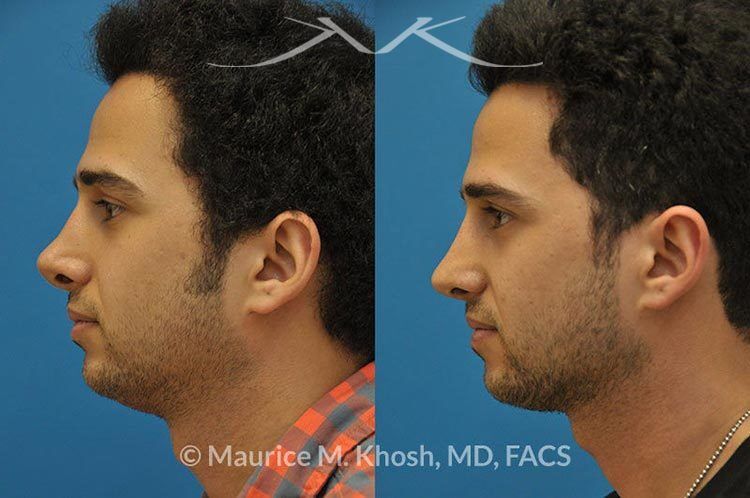
The over-rotated nose — sometimes called the “pig nose” or short nose — is one of the most feared outcomes of rhinoplasty, and one of the most aesthetically distinctive. The nasal tip rotates upward beyond its natural position, the nose itself appears shortened from base to tip, and the nostrils become excessively visible from the front view rather than concealed beneath the columella. Although the deformity is most obvious from the profile and three-quarter views — where the upward tilt of the tip is unmistakable — the front view is equally affected by the unnatural prominence of the nostrils. The over-rotated nose is almost always the consequence of imprudent and excessive cartilage removal during a previous rhinoplasty. Correcting it requires structural reconstruction with cartilage grafting — and represents one of the most demanding categories within rhinoplasty and nose reshaping.
The over-rotated nose — sometimes called “pig nose” — is one of the most feared outcomes of rhinoplasty, and one of the most technically demanding to correct. Repair requires not just adding cartilage back, but understanding precisely which structural supports were removed during the original surgery. Dr. Maurice Khosh’s three decades of revision rhinoplasty experience are paired with the standards-setting perspective that comes from service on the American Academy of Facial Plastic and Reconstructive Surgery (AAFPRS) Board Examination and Continuing Education Committees. Dual board-certified and a Fellow of the American College of Surgeons (FACS), Dr. Khosh has been recognized as a perennial Castle Connolly Top Doctor and a Best Doctors in America honoree.
What Causes a Short or Over-Rotated Nose
The over-rotated nose is almost exclusively a complication of previous rhinoplasty rather than a naturally occurring anatomy. Several specific mechanisms during the prior surgery can produce this outcome:
- Excessive Septal Cartilage Removal: When too much of the caudal (lower) septum is removed during a previous rhinoplasty, the nasal tip loses its forward and downward support, allowing it to rotate upward
- Over-Aggressive Cephalic Trim: Removing too much of the upper edge of the tip cartilages disrupts the balance of forces holding the tip in position, allowing excessive upward rotation
- Excessive Tip Cartilage Removal: When too much of the lower lateral cartilages is removed, the tip loses both its structural support and its anatomical position
- Over-Aggressive Combined Maneuvers: Many cases involve multiple cartilage-reducing procedures performed during the same surgery — each individually conservative, but cumulatively over-reducing
- Healing-Related Cicatricial Contraction: Scar tissue contraction during healing can pull the tip upward over time, sometimes producing rotation that emerged months or years after the original surgery
- Naturally Short Nose: A small minority of patients have a naturally short nasal length that produces a similar appearance without any previous surgery
Non-Surgical Correction for a Mildly Over-Rotated Nose
For patients with mild over-rotation — where the upward tilt of the tip is subtle — non-surgical correction using dermal filler can produce a meaningful improvement without surgery. Filler placed along the bridge — particularly near the tip and along the upper bridge — can:
- Soften the Visual Angle: Creating the illusion of a longer, more proportionate nose by adding height to the bridge surrounding the tip
- Reduce Visible Nostril Show: Subtle filler placement can de-emphasize the prominence of the nostrils on frontal view
- Provide a Temporary Trial: Some patients use non-surgical correction to evaluate what surgical lengthening would look like before deciding on revision rhinoplasty
Important limitations:
- Ineffective for Moderate to Severe Rotation: When the rotation is significant, no amount of filler can adequately compensate; surgical reconstruction is the appropriate option
- Does Not Address Structural Cause: Filler cannot replace the cartilage that was removed during the previous surgery
- Temporary: Lasts 12 to 18 months and must be maintained with periodic re-treatment
Surgical Correction for a Short or Over-Rotated Nose
Surgical correction of the over-rotated nose is the only permanent solution. The open rhinoplasty approach is almost universally the most effective surgical technique for this correction, because the complexity of the cartilage reconstruction requires direct visualization of the nasal anatomy:
- Open Rhinoplasty Approach: A small incision on the columella allows the surgeon to fully visualize the internal nasal structures and the previous surgical changes
- Cartilage Graft Reconstruction: Multiple cartilage grafts are typically required to restore the lost structural support and lengthen the nose to a more proportionate position
- Tip Repositioning: The nasal tip is rotated downward and projected forward into a more natural anatomical position, with the cartilage grafts holding it in the new position
- Cartilage Sources: Septal cartilage is preferred when available, but in revision cases the septum may have been partially or fully harvested during the previous surgery — making ear cartilage or rib cartilage necessary alternatives
Septum Extension Grafts to Lengthen the Nose
The most important specific technique for correcting the over-rotated nose is the septum extension graft. This is a cartilage graft (typically from the patient’s own septum, ear, or rib) that is precisely shaped and fixed to the lower edge of the existing septal cartilage to extend the structural framework of the nose forward and downward.
The septum extension graft accomplishes several things simultaneously:
- Lengthening the Nose: Adding actual length to the underlying cartilage framework, allowing the tip to be repositioned in a longer, more proportionate position
- Restoring Tip Support: Providing a stable platform onto which the tip cartilages can be secured
- Repositioning the Tip Rotation: Allowing the tip to be brought into a more natural rotated position, eliminating the upturned “pig nose” appearance
- Improving Frontal Appearance: Reducing nostril visibility on the frontal view by re-projecting the tip downward over the nostrils
- Permanent Result: Once the graft integrates with the surrounding tissue, the correction is permanent
“The over-rotated nose is one of the most technically demanding corrections in rhinoplasty — and also one of the most rewarding, because the visible difference for the patient is so dramatic. The key insight is that you cannot simply ‘push the tip down’ — the cartilage support that previously held the tip in its natural position has been removed, and it has to be physically rebuilt with grafts before the tip can be repositioned. Without that structural reconstruction, any apparent correction will eventually relapse as the tip returns to whatever position the current cartilage framework allows.” — Dr. Maurice Khosh
Why Over-Rotated Nose Correction Is Revision Rhinoplasty
Because nearly all over-rotated noses are the result of previous rhinoplasty, this correction is fundamentally a revision rhinoplasty — with the considerations specific to that category:
- Limited Donor Cartilage: The septum may have been substantially harvested during the previous surgery, making ear or rib cartilage harvesting necessary
- Scar Tissue Considerations: Previous surgery affects healing patterns and requires careful dissection through scarred tissue planes
- Longer Recovery Timeline: Revision rhinoplasty results typically continue to refine for 18 to 24 months after surgery
- Realistic Expectation Setting: Revision rhinoplasty produces meaningful improvement but rarely produces the result that a well-planned primary rhinoplasty would have delivered originally
- Surgeon Experience Matters: Revision rhinoplasty for over-rotation is technically more demanding than primary rhinoplasty and benefits substantially from a surgeon with significant revision experience
Over-Rotated Nose Surgery Recovery
Surgical correction of the over-rotated nose is typically performed under general anesthesia at an accredited surgical facility. The procedure usually takes three to four hours depending on the complexity of the cartilage reconstruction required and the donor site selected (septum, ear, or rib). Rib cartilage harvest adds approximately 30 to 60 minutes for the chest incision and graft preparation. Patients return home the same day with a small external splint protecting the nose for the first week. Bruising and swelling are most pronounced during the first two weeks, with the splint removed at one week. Because of the extensive cartilage grafting and the scarred tissue from previous surgery, the final result takes longer to fully emerge than primary rhinoplasty — typically eighteen to twenty-four months post-surgery.
Why Choose Dr. Khosh for Short or Over-Rotated Nose Correction
- Three Decades of Revision Rhinoplasty Experience: Extensive experience with the specific technical demands of correcting previous rhinoplasty
- AAFPRS Standards-Setting Service: Service on the American Academy of Facial Plastic and Reconstructive Surgery Board Examination and Continuing Education Committees
- Full Range of Cartilage Sources: Septum, ear, and rib cartilage all available to source the grafts needed for nose lengthening
- Comprehensive Reconstruction Approach: Septum extension grafts, tip support reconstruction, and tip repositioning performed as a coordinated reconstruction
- Realistic Expectation Setting: Honest conversation about what revision rhinoplasty can and cannot accomplish
- Dual Board Certification: Combined facial plastic and head and neck surgery expertise
- Park Avenue Convenience: Private Upper East Side practice serving patients from across Manhattan and the tri-state area
Schedule Your Over-Rotated Nose Consultation in NYC
If you are dealing with a short or over-rotated nose following previous rhinoplasty, the first step is a thorough evaluation of the specific structural changes from the prior surgery and a realistic discussion of what corrective surgery can achieve. To schedule a private consultation with Dr. Khosh at his Park Avenue office in New York City, contact us today, or call (212) 339-9988.