
Flaring or Wide Nostrils Correction in NYC
Wide nostrils and flaring nostrils are two related but anatomically distinct concerns that affect the appearance of the lower nose. Wide nostrils refers to excess horizontal width at the base of the nose. Flaring nostrils refers to excess outward curvature where the nostril walls bow outward, particularly visible when the patient smiles or breathes deeply. The two findings are often seen together but can also be present independently, and each requires somewhat different surgical correction. Either or both can give the nose a heavy, unrefined appearance — and because the nostrils sit at the base of the nose, their proportion significantly affects how the entire nose looks. Nostril narrowing is one of the procedures within rhinoplasty and nose reshaping at Dr. Khosh’s Park Avenue practice, and is often performed simultaneously with other refinements — lowering the nasal bridge, narrowing the bridge, or refining the tip — for a comprehensively balanced result.
Wide nostrils and flaring nostrils are two distinct anatomical concerns that often appear together but require different surgical approaches — and identifying which one (or both) is responsible is essential to choosing the right correction. Dr. Maurice Khosh brings both technical experience and an artist’s eye for proportion to alar base work. A lifelong student of figure drawing and calligraphy whose aesthetic training informs every nasal proportion decision, Dr. Khosh is dual board-certified by the American Board of Facial Plastic and Reconstructive Surgery and the American Board of Otolaryngology–Head and Neck Surgery. A Fellow of the American College of Surgeons (FACS), he has been recognized as a perennial Castle Connolly Top Doctor and a Best Doctors in America honoree.
Wide Nostrils vs. Flaring Nostrils: The Anatomical Distinction
Although the two issues often look similar to patients, they have different anatomical origins and respond best to different surgical techniques:
- Wide Nostrils: Excess horizontal width at the base of the nose, often inherited and present at rest; the nostril openings themselves are larger and/or positioned farther apart
- Flaring Nostrils: Excess outward curvature of the nostril walls, sometimes visible at rest but typically more pronounced during smiling, breathing, or expressive movement
- Combined Width and Flare: Many patients present with both findings together, requiring a combined surgical approach
- Under-Projected Tip Contributing: In some patients, the appearance of nostril width is actually exaggerated by an under-projected nasal tip; in these cases, increasing tip projection alone can substantially improve the visible nostril appearance
Non-Surgical Nostril Refinement with Dermal Filler
For patients with mildly wide nostrils — particularly those whose nostril width is partly the result of an under-projected nasal tip — non-surgical correction using dermal filler can produce a visible improvement without surgery. Carefully placed filler at the base of the columella or in the nasal tip itself can increase tip projection and height, which has the visual effect of narrowing the appearance of the nostrils and refining the base of the nose.
Limitations to understand:
- Effective Only for Mild Nostril Width: Flared nostrils and significantly wide nostrils require surgical correction; filler cannot adequately narrow the actual nostril dimensions
- Best for Tip-Related Width: Most effective when the visible nostril width is partly produced by an under-projected tip rather than by intrinsic nostril width
- Temporary: Filler effect lasts 9 to 18 months
- Cannot Address Flare: Filler cannot change the outward curvature of the nostril walls
Surgical Correction for Mild Wide Nostrils with Under-Projected Tip
When the flaring or width of the nostrils is mild and the nasal tip is under-projected, the most appropriate correction may not be at the nostril base at all — instead, increasing the projection of the nasal tip can narrow the apparent width of the nostrils and reduce the wide appearance at the base of the nose. Several tip-lengthening techniques can accomplish this:
- Columellar Strut: A cartilage graft placed between the tip cartilages to extend tip projection forward
- Septo-Columellar Sutures: Specialized sutures securing the tip cartilages to the septum at a more forward position
- Septum Extension Grafts: Cartilage grafts that extend the septum forward, supporting greater tip projection and tip rotation
Each of these techniques uses cartilage harvested from the patient’s own septum, and each addresses the underlying structural cause of tip-related nostril width.
Alar Base Reduction for Moderate to Severely Flared or Wide Nostrils
For moderate to severely flared or wide nostrils, surgical reduction at the alar base — where the nostrils attach to the cheek — is the most effective approach:
- Wedge Resection at the Alar Base: A small, precisely planned wedge of skin and underlying tissue is removed at the alar base on each side, then closed with meticulous suture technique
- Imperceptible Scar Placement: When properly executed, the incisions heal with virtually invisible scars hidden within the natural junction between the nostril and the cheek
- Customized Wedge Design: The location, shape, and size of the wedge resection can be individualized to address the patient’s specific combination of flare versus width — different wedge designs produce different reductions
- Combined with Tip Techniques: When the patient also has an under-projected tip, the wedge resection can be combined with columellar strut, septo-columellar suture, or septum extension graft techniques in the same procedure for a comprehensively refined result
“Alar base surgery is one of the procedures where the small details matter more than the technical complexity. The actual wedge resection isn’t a difficult maneuver, but where the wedge sits, how the closure is designed, and how much tissue comes out all determine whether the result looks balanced or visibly altered. Symmetry between the two sides has to be absolute. When all those details are right, the change is dramatic but the surgery itself is invisible.” — Dr. Maurice Khosh
Combined Nostril and Rhinoplasty Procedures
Nostril narrowing is rarely performed as an isolated procedure — most patients benefit from coordinated work that addresses the full proportional balance of the nose. Common combinations include:
- Nostril Narrowing + Bridge Refinement: Lowering and narrowing the dorsal bridge alongside alar base reduction for proportional balance
- Nostril Narrowing + Tip Refinement: Refining the nasal tip alongside alar base reduction, since the tip and the base together define the lower-nose appearance
- Nostril Narrowing + Septoplasty: When patients also have breathing issues from septal deviation, the septoplasty can be performed in the same surgical session
- Nostril Narrowing as Part of Comprehensive Rhinoplasty: For patients undergoing full rhinoplasty, alar base work is often one of the final refinement steps that completes the result
Nostril Surgery Recovery
Nostril narrowing surgery — whether performed in isolation or as part of a larger rhinoplasty — is typically performed under general anesthesia or deep sedation. The procedure itself takes approximately 30 to 60 minutes when performed alone, longer when combined with other rhinoplasty work. Patients return home the same day. Bruising and swelling at the alar base resolve within one to two weeks, and most patients return to work and non-physical activities within seven to ten days. The fine sutures at the alar base are typically removed within five to seven days. Final results — including the full resolution of subtle residual swelling — become visible at approximately three to six months.
Why Choose Dr. Khosh for Nostril Surgery
- Aesthetic Eye for Proportion: Lifelong study of figure drawing and calligraphy informs every alar base assessment
- Three Decades of Rhinoplasty Experience: Refined expertise across the full range of nostril correction techniques
- Diagnostic Distinction: Careful identification of whether the patient’s concern is width, flare, or tip-related — guiding the right surgical approach
- Imperceptible Scar Technique: Alar base incisions placed and closed to heal within the natural anatomical junction
- Combined Procedure Capability: Alar base reduction performed alongside comprehensive rhinoplasty when appropriate
- Dual Board Certification: Combined facial plastic and head and neck surgery expertise
- Park Avenue Convenience: Private Upper East Side practice serving patients from across Manhattan and the tri-state area
Schedule Your Nostril Consultation in NYC
If the width or flare of your nostrils is affecting how the rest of your nose looks, the first step is a thorough evaluation of which anatomical factor is actually responsible — and a discussion of whether surgical or non-surgical correction will best deliver the result you want. To schedule a private consultation with Dr. Khosh at his Park Avenue office in New York City, contact us today, or call (212) 339-9988.
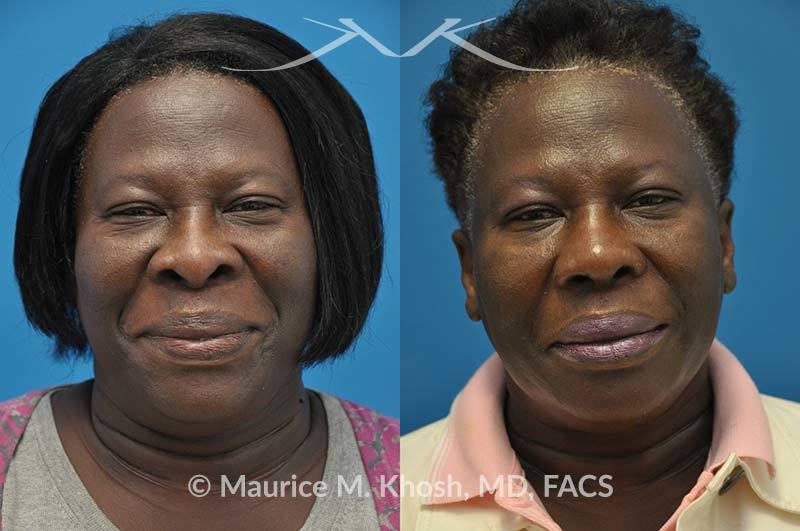
Wide nostrils imply excess width of the nostrils whereas flaring nostrils imply excess outward curvature of the nostrils. These two findings are often seen together although they can be present independently. Flaring nostrils or wide nostrils can give the nose a heavy and unrefined appearance. Nostril narrowing is often performed simultaneously with lowering and narrowing the nasal bridge, and refining the nasal tip.