Wide Nasal Tip Refinement in NYC
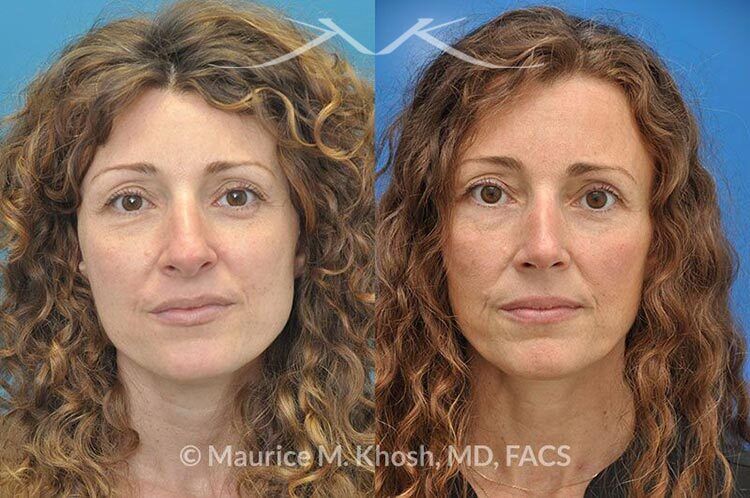
A wide nasal tip — also described as a bulbous tip, rounded tip, or sometimes called a “fat” or “bulky” nose — is one of the most common reasons patients seek rhinoplasty. The wide tip is most apparent on the front view of the face, where the rounded fullness of the tip can dominate the overall nasal appearance and pull attention away from other features. Patients with a bulbous nasal tip typically want a thinner, more proportionate tip that blends naturally into the bridge of the nose, producing a refined, balanced nasal contour. Reshaping a wide nasal tip can have a dramatic effect on the entire face — particularly when the tip width has been a defining feature of the patient’s nose since adolescence. Wide nasal tip refinement is one of the procedures within rhinoplasty and nose reshaping at Dr. Khosh’s Park Avenue practice in New York City.
Narrowing a wide nasal tip is one of the few rhinoplasty procedures with no meaningful non-surgical option — the tip cartilages themselves determine the visible shape, and changing the shape requires changing the cartilages. Dr. Maurice Khosh’s three decades of tip refinement work cover the full range of techniques required, including cephalic trimming, dome binding sutures, and shield grafting. Dual board-certified by the American Board of Facial Plastic and Reconstructive Surgery and the American Board of Otolaryngology–Head and Neck Surgery and the youngest recipient of Columbia University Medical Center’s Maxwell Abramson Resident Teaching Award, Dr. Khosh is a Fellow of the American College of Surgeons (FACS) and a perennial Castle Connolly Top Doctor.
What Causes a Wide or Bulbous Nasal Tip
A wide nasal tip can result from several distinct anatomical factors, often present in combination:
- Wide Lower Lateral Cartilages: The paired cartilages that form the structure of the tip are inherently wide or widely separated
- Thick Overlying Skin: Naturally thick skin overlying the tip cartilages obscures their definition and contributes to a fuller, rounder appearance
- Convex Tip Cartilage Curvature: When the tip cartilages curve outward more than usual, they push the surface skin outward and produce visible width
- Increased Fibrofatty Tissue: Extra soft tissue between the cartilages and the skin adds bulk that contributes to the wide appearance
- Genetic and Ethnic Variation: Wide nasal tip anatomy is more common in certain ethnic backgrounds and frequently runs in families
- Combined Factors: Most patients have multiple contributing factors — wide cartilages and thick skin and increased soft tissue — which is why tip refinement often requires multiple coordinated techniques
Why Wide Tip Cannot Be Effectively Corrected with Filler
Unlike many rhinoplasty concerns, a wide tip has no effective non-surgical option. This is worth understanding clearly:
- The Problem Is Structural: Tip width is determined by the underlying cartilage and overlying skin thickness, not by missing volume that filler could replace
- Filler Adds Volume — Not Less: Dermal filler can only add volume; it cannot reduce or reshape existing cartilage
- Some Patients Are Told Otherwise: Occasionally patients are offered filler “tip refinement” elsewhere, but this typically involves filler placed in surrounding areas to create optical illusion — and produces minimal improvement for true tip width
- Surgical Refinement Is the Only Meaningful Option: Patients seeking real tip narrowing should plan for surgical correction rather than ongoing non-surgical maintenance
Surgical Techniques for Wide Nasal Tip Refinement
The surgical approach to wide tip refinement depends on the specific anatomical factors contributing to the width and the extent of narrowing desired. The following techniques may be used individually or — more commonly — in coordinated combination:
- Cephalic Trimming: Trimming and shaping the upper edge of the tip cartilages to narrow their profile and allow them to be repositioned in a more refined configuration; one of the foundational techniques in tip refinement
- Dome Binding Sutures: Specialized sutures that narrow the nasal tip cartilages by bringing the right and left sides closer together at the central dome of the tip, producing a more defined and projected tip point
- Shield Graft: A cartilage graft (typically harvested from the patient’s own septum) placed in front of the tip cartilages to add definition and projection to the tip itself, helping to camouflage any residual width and create a more refined contour
- Lower Lateral Cartilage Repositioning: For tips that are wide due to outward-curving cartilage, the cartilages may be repositioned, reshaped, or reinforced with grafts to produce a narrower visible contour
- Soft Tissue Reduction: In selected patients with significant fibrofatty tissue contributing to tip bulk, careful soft tissue reduction can complement the cartilage work
- Tip Refinement in Coordinated Plan: Most refinements combine two or more techniques — for example, cephalic trim plus dome binding sutures plus shield graft — because each addresses a different anatomical contribution to the width
“Tip refinement is one of the procedures where the technical precision matters more than almost any other rhinoplasty maneuver. The difference between a beautifully refined tip and an over-refined, unnatural tip can be a millimeter of cartilage. Combining the right techniques — and using them conservatively — is what produces a tip that looks like a refined version of the patient’s own nose rather than an obvious surgical alteration. The most satisfying results come from restraint paired with the right combination of techniques.” — Dr. Maurice Khosh
Wide Tip Surgery Recovery
Surgical wide tip refinement is typically performed under general anesthesia or deep sedation at an accredited surgical facility. The procedure can be performed through either closed (incisions inside the nostrils) or open (small columellar incision) approach, depending on which techniques are being used. The procedure usually takes one to three hours depending on the complexity of the techniques required and whether other rhinoplasty refinements are performed simultaneously. Patients return home the same day with a small external splint protecting the nose for the first week. Bruising and swelling are most pronounced during the first one to two weeks, with the splint removed at one week and most patients returning to non-physical work at this point. Tip refinement results take particularly long to fully emerge — most patients see continued refinement of the tip contour for twelve to eighteen months as residual swelling resolves and the tissues finalize their healing.
Why Choose Dr. Khosh for Wide Tip Refinement
- Three Decades of Tip Refinement Experience: Refined coordination of cephalic trim, dome binding sutures, shield grafts, and complementary techniques
- Maxwell Abramson Resident Teaching Award: Youngest recipient at Columbia University Medical Center — reflecting recognition for the kind of technical precision that tip work requires
- Combined-Technique Approach: Tip refinement plans matched to each patient’s specific anatomical contributors rather than applying a single default technique
- Restraint-First Philosophy: Conservative refinement that produces a result looking like a refined version of the patient’s own nose, not an obviously surgical tip
- Dual Board Certification: Combined facial plastic and head and neck surgery expertise
- Park Avenue Convenience: Private Upper East Side practice serving patients from across Manhattan and the tri-state area
Schedule Your Wide Tip Consultation in NYC
If a wide or bulbous nasal tip is affecting how your nose looks, the first step is a thorough evaluation of which anatomical factors are contributing to the width — cartilage shape, skin thickness, soft tissue volume, or some combination — and a discussion of which surgical techniques will best deliver the refined result you want. To schedule a private consultation with Dr. Khosh at his Park Avenue office in New York City, contact us today, or call (212) 339-9988.