Ear Pinning Surgery or Otoplasty
Few procedures in facial plastic surgery require the level of precision that otoplasty demands. Whether the concern is protruding ears that have caused self-consciousness since childhood, asymmetry between the two sides, elongated or enlarged ears, or unnatural folds in the cartilage, the goal of ear pinning surgery is always the same: a natural-looking ear that fits the patient’s face. Otoplasty — also known as ear pinning or ear reshaping surgery — addresses these concerns by precisely repositioning the ear cartilage and recreating the natural antihelical fold that should sit just inside the ear’s outer rim. When performed well, the result is invisible: an ear that simply looks normal, not an ear that looks operated on. Otoplasty is one of the ear procedures Dr. Khosh performs at his Park Avenue practice in New York City.
Few facial plastic surgeons in New York bring the depth of published otoplasty authority that Dr. Maurice Khosh offers. Dual board-certified by the American Board of Facial Plastic and Reconstructive Surgery and the American Board of Otolaryngology–Head and Neck Surgery, Dr. Khosh is a Fellow of the American College of Surgeons (FACS) and a past president of the New York Facial Plastic Surgery Society. He is the author of “Modification of the Mustarde Otoplasty Technique Using Temporary Contouring Sutures” — a peer-reviewed publication in the Archives of Facial Plastic Surgery that describes a refinement of the most widely used ear pinning technique in the world. The Mustarde technique is the standard approach to recreating the antihelical fold in otoplasty; Dr. Khosh’s published modification has contributed to the technical literature surrounding this procedure. A lifelong student of figure drawing and calligraphy, he brings an artist’s eye for ear proportion and shape to every consultation. With three decades of operating on ear cartilage and recognized as a perennial Castle Connolly Top Doctor, Dr. Khosh has performed otoplasty across the full spectrum of ages and complexities.
What Otoplasty Can Address
Otoplasty is a versatile procedure that can correct a range of cosmetic and functional concerns affecting the ears. Dr. Khosh performs ear pinning surgery to address:
- Protruding Ears: The most common indication — ears that sit too far from the head, sometimes called “Dumbo ears” or “prominent ears”
- Asymmetric Ears: Subtle or significant differences between the two ears that affect facial symmetry
- Enlarged Ears (Macrotia): Ears that are disproportionately large relative to the rest of the face
- Elongated Ears: Vertically elongated ears that can be subtly reshaped for better proportion
- Missing or Incomplete Antihelical Fold: A flat ear contour from cartilage that never developed the natural fold
- Constricted or “Cup” Ears: Mild congenital deformities where the upper rim of the ear is folded downward
- Lop Ears: Ears with the upper rim drooping forward and downward
“The Mustarde technique is one of the most elegant ideas in ear surgery — it uses strategically placed sutures to recreate the natural antihelical fold without removing or cutting cartilage. The art is in the suture placement, the tension, and the patient-specific tailoring. Done well, the ear looks like it was always shaped that way. Done with the wrong technique or excessive correction, you get the ‘pinned-back’ look that makes obvious that someone has had surgery.” — Dr. Maurice Khosh
Ear Pinning in Children and Adults
Dr. Khosh recommends against operating on children younger than five years of age — ear cartilage continues to grow until that point, and surgical results are more reliable when the ear has reached its mature adult size and shape. Beyond that minimum age, otoplasty can be performed at any point in life. Children between the ages of five and ten often benefit from having the procedure done before they enter the social environment of middle school, where teasing about prominent ears can be common. Teenagers and adults often choose otoplasty after years of self-consciousness — and frequently say afterward that they wish they had done it sooner. The procedure is the same regardless of age, with technique calibrated to the patient’s individual ear anatomy.
Candidacy for Otoplasty
Good candidates for otoplasty are typically children five years and older, teenagers, or adults with one or more of the concerns listed above — protruding, asymmetric, elongated, or enlarged external ears. Candidates should be in good general health, have realistic expectations about what the procedure can deliver, and understand that the goal is improvement in proportion rather than perfection. During consultation, Dr. Khosh evaluates the underlying ear anatomy, discusses the patient’s specific concerns, and determines which technique — Mustarde sutures, cartilage shaving, or combination — will produce the most natural-looking result for that individual.
Case Study
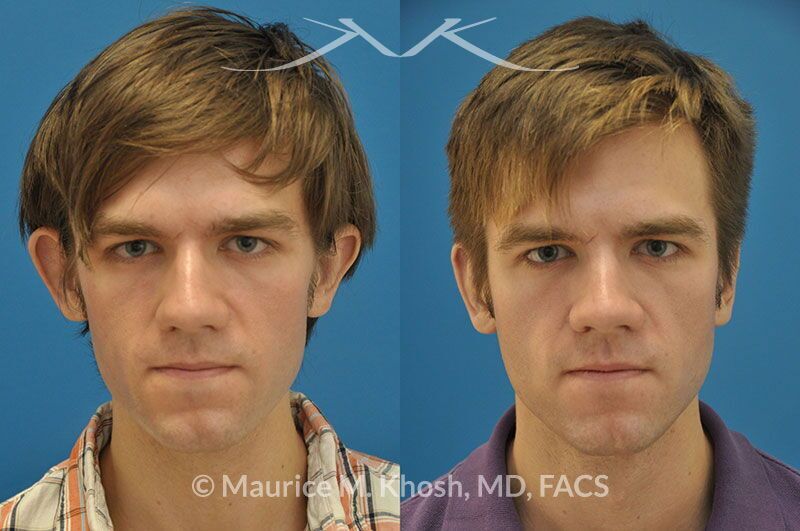
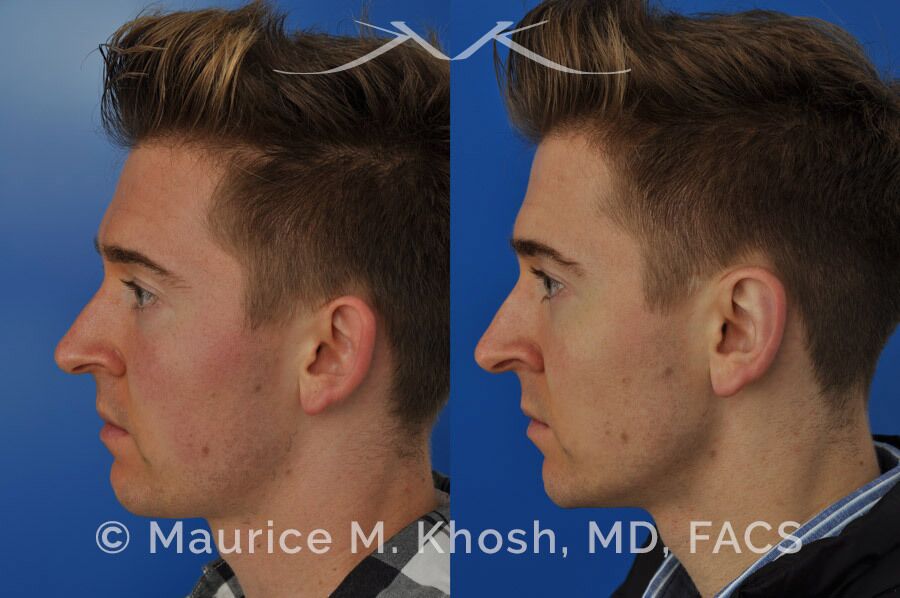
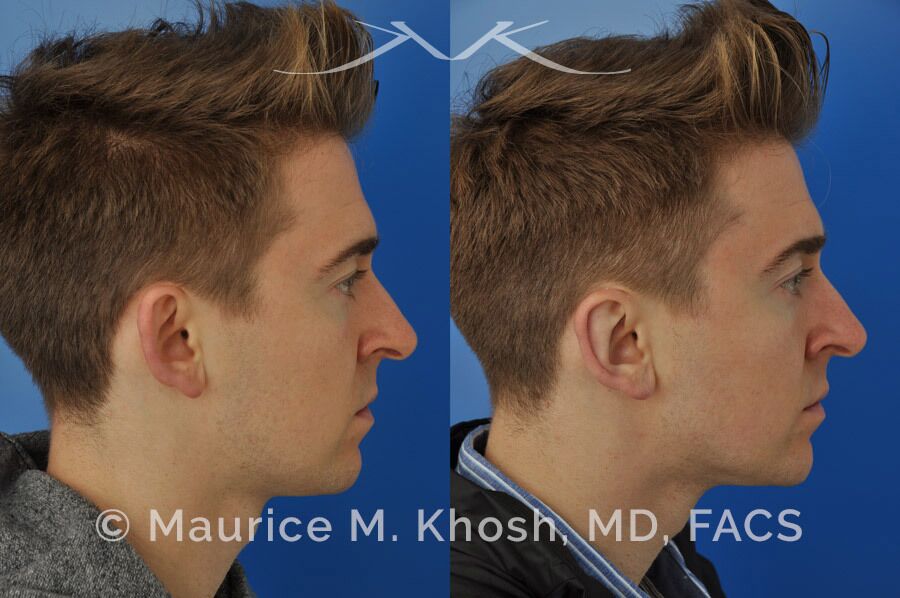
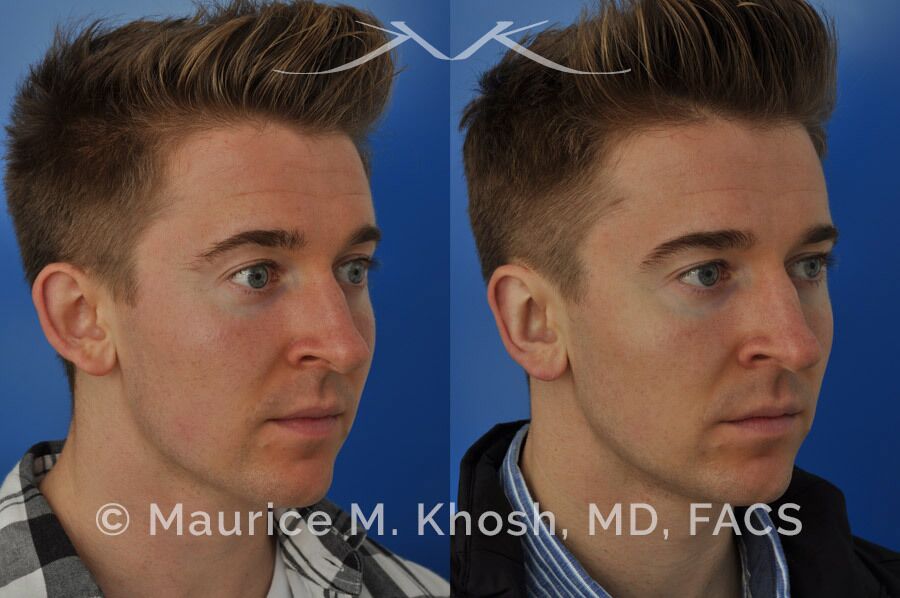
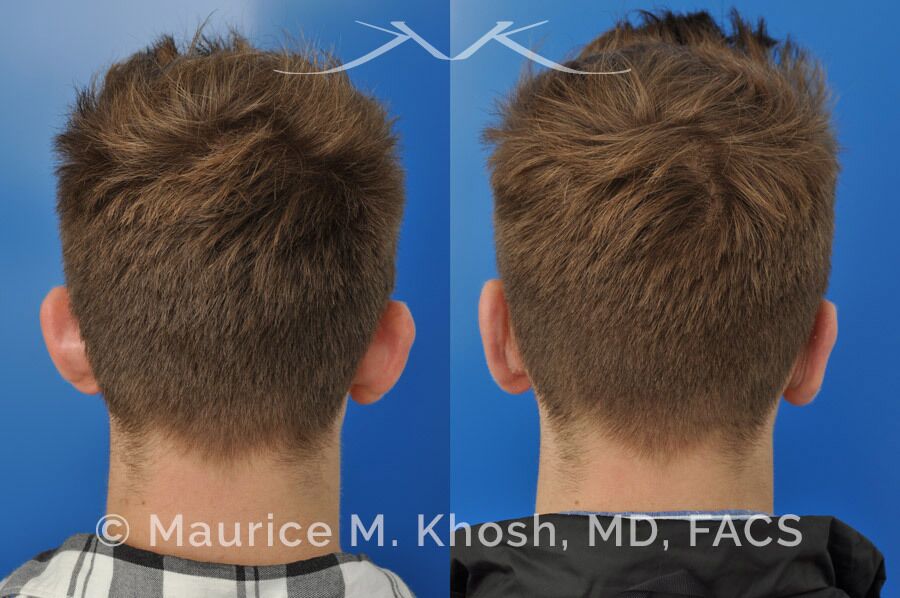
This 25-year-old man had congenital protruding ears. He underwent bilateral otoplasty or ear pin pack.
- Patient: 25-year-old man with over projected ears
- Problem: Bilateral prominent ears
- Procedure: Bilateral otoplasty to pin the ears back
Disclaimer: These are actual results for patients of Dr. Maurice Khosh. Plastic and cosmetic surgery results can vary between patients.
Frequently Asked Questions
-
Good candidates for otoplasty are older than five years, and have unilateral or bilateral protuberant, asymmetric, elongated or enlarged external ears.
-
The ears are wrapped with a bandage for several days. Discomfort from surgery is typically resolved after one week, and patients are fully functional. Swelling and bruising will dissipate within two weeks. We recommend avoiding contact sports where the ears can be traumatized for six months.
-
The most common form of otoplasty is performed to pin protruding ears back. However, other otoplasty techniques allow reducing the size of the ears. This version of the procedure requires different incision placements and necessitates cartilage incisions.
-
It is true that the ear lobules elongate as individuals age. Ear lobe shortening is a small surgical procedure where the lobule is cut shorter and repaired. This represents the least complicated form of otoplasty.
-
In younger patients and in older anxious patients, general anesthesia is recommended. Otherwise, local anesthesia with or without sedation is used.
Otoplasty Ear Surgery Patient Testimonial
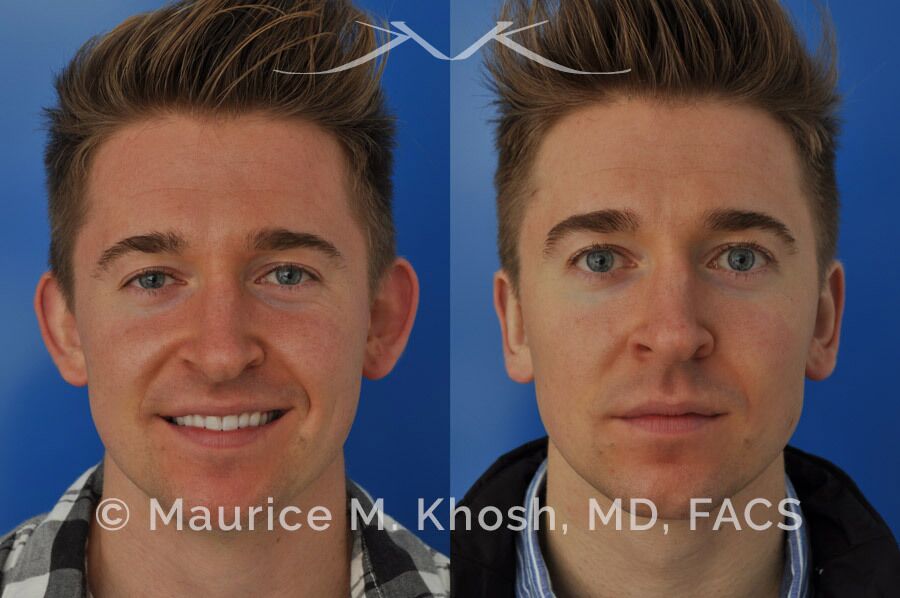
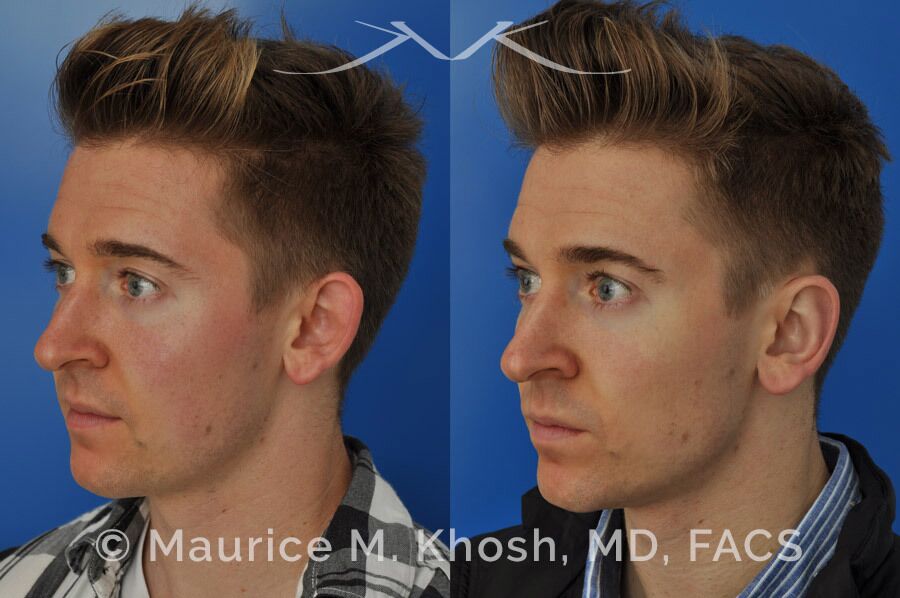
Schedule Your Ear Pinning Consultation in Manhattan
Whether you are considering otoplasty for yourself, a teenager, or a child five years or older, the right outcome depends on detailed evaluation of the underlying ear anatomy and careful selection of the technique best matched to your concerns. Dr. Khosh offers thorough consultations to discuss the specific changes you are hoping to make, walk through how the procedure works, and develop an individualized surgical plan. To schedule a consultation with Dr. Khosh at his Park Avenue office in New York City, call (212) 339-9988 or contact us online to request an appointment.