Xanthelasma Removal in NYC
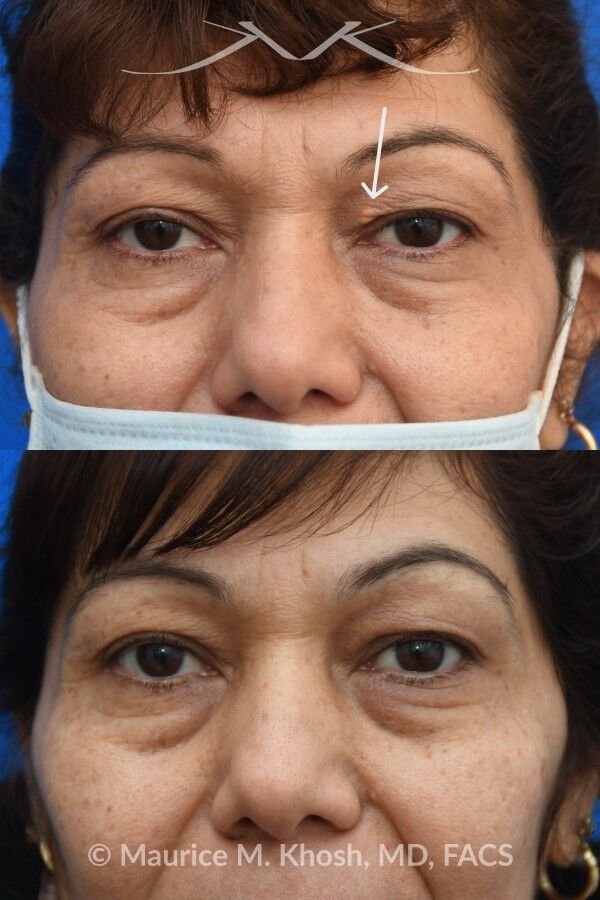
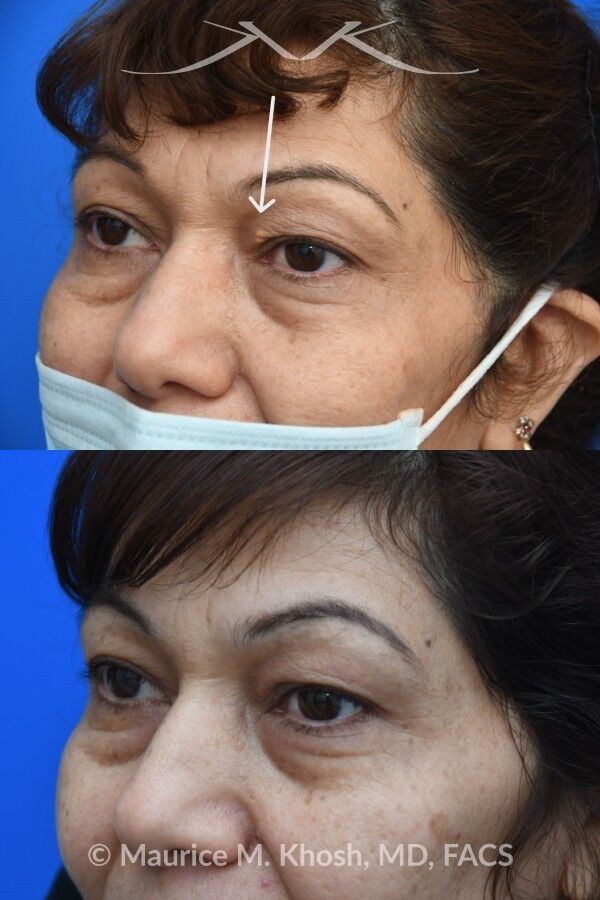
Xanthelasma — the soft, yellowish plaques that form on or around the eyelids — are among the most visible and persistent skin lesions of the periorbital area. Composed of cholesterol deposits that gradually accumulate beneath the thin eyelid skin, xanthelasma most commonly develop at the inner corner of the upper eyelid, though they can also appear on the lower lid or extend across larger portions of the eyelid surface. The lesions themselves are painless and benign, but their location on one of the most visually prominent parts of the face makes them a frequent cosmetic concern. Importantly, xanthelasma can also be a clinical sign worth investigating — roughly half of affected patients have elevated cholesterol or other lipid abnormalities, which is why a thorough evaluation is part of every consultation. Xanthelasma removal is one of the surgical and non-surgical options available for the eyes and brows at Dr. Khosh’s Park Avenue practice in New York City.
Removing xanthelasma well requires more than simple excision. The lesions sit on some of the thinnest skin on the body, and the resulting scar — if not carefully managed — can be as cosmetically conspicuous as the original lesion. Dr. Maurice Khosh’s published expertise on scar treatment is directly relevant to xanthelasma work. He authored “Surgical Treatment of Facial Scars” — a published chapter through Thieme Publishers (2014) — that informs the closure technique he brings to every eyelid excision. Dual board-certified by the American Board of Facial Plastic and Reconstructive Surgery and the American Board of Otolaryngology–Head and Neck Surgery, Dr. Khosh is a Fellow of the American College of Surgeons (FACS) and a past president of the New York Facial Plastic Surgery Society. With three decades of operating on the eyelid skin and recognized as a perennial Castle Connolly Top Doctor and a Best Doctors in America honoree, he offers a full range of removal techniques — surgical excision, laser ablation, and chemical treatment — selected based on the size, location, and depth of each individual lesion.
What Causes Xanthelasma
Xanthelasma develop when cholesterol-rich material gradually deposits beneath the eyelid skin. The lesions appear as soft, slightly raised yellow plaques that tend to grow slowly over months to years. Factors that contribute to xanthelasma formation include:
- Elevated Blood Cholesterol or Triglycerides: Present in approximately 50 percent of affected patients
- Genetic Predisposition: Familial hypercholesterolemia and other inherited lipid disorders increase the likelihood significantly
- Diabetes and Liver Disease: Both conditions are associated with higher rates of xanthelasma development
- Hypothyroidism: Reduced thyroid function can elevate cholesterol levels and predispose to xanthelasma
- Idiopathic Cases: Some patients with completely normal cholesterol levels still develop xanthelasma — particularly women between ages 30 and 60
Because xanthelasma can signal an underlying lipid abnormality, Dr. Khosh recommends bloodwork to evaluate cholesterol and triglyceride levels for any patient who has not had a recent lipid panel. Addressing an underlying lipid disorder — through diet, lifestyle, or medication — is a meaningful part of long-term recurrence prevention.
Treatment Options for Xanthelasma
The right approach depends on the size, location, depth, and number of the lesions. Dr. Khosh offers a full range of removal techniques:
- Surgical Excision: The most reliable approach for larger or deeper lesions — the xanthelasma is precisely excised and the eyelid skin is closed with fine sutures designed to produce a minimal, well-camouflaged scar
- CO2 Laser Ablation: A laser-based approach that vaporizes the cholesterol deposits layer by layer, often producing excellent cosmetic results for smaller, more superficial lesions
- Chemical Peel (Trichloroacetic Acid): A controlled chemical treatment that can effectively address shallow xanthelasma without a surgical incision
- Radiofrequency Treatment: An alternative for selected lesions, using radiofrequency energy to remove the deposits with minimal collateral effect
- Combined Approach: Larger or multifocal lesions sometimes benefit from a combination of techniques delivered across more than one treatment session
“The challenge with xanthelasma isn’t removing the deposits — it’s removing them without leaving a scar that looks worse than the original lesion did. The eyelid skin is the thinnest on the body, and the closure technique determines whether the result is invisible or obvious. That is where my work on facial scar treatment directly informs how I approach this procedure.” — Dr. Maurice Khosh
What to Expect from the Procedure
Xanthelasma removal is typically performed under local anesthesia in Dr. Khosh’s Park Avenue office. The procedure usually takes 30 to 60 minutes depending on the size and number of lesions. Patients return home the same day with detailed care instructions. Most experience mild swelling and minor bruising for several days, with bruising typically resolving more quickly than swelling. Sutures from surgical excision are usually removed within five to seven days. Most patients return to work and social activities within a few days, with full healing of the eyelid skin over the following weeks.
Preventing Recurrence
Xanthelasma have a recurrence rate of approximately 40 percent within the first year if underlying lipid abnormalities are not addressed. Dr. Khosh emphasizes a comprehensive approach: removal of the visible lesions paired with lipid panel evaluation, coordination with the patient’s primary care physician if cholesterol management is needed, and continued monitoring for any new lesion development. Patients who actively manage their underlying lipid levels — through diet, exercise, statin medication, or other interventions as appropriate — have substantially better long-term outcomes.
Why Patients Choose Dr. Khosh for Xanthelasma Removal
- Published Scar Treatment Authority: Author of “Surgical Treatment of Facial Scars” through Thieme Publishers (2014)
- Full Range of Removal Techniques: Surgical excision, laser ablation, and chemical treatment, selected based on the individual lesion
- Dual Board Certification: Both facial plastic and head and neck surgery expertise — the same training that informs evaluation of underlying medical contributors
- Recurrence-Focused Approach: Treatment paired with appropriate medical workup and recurrence prevention planning
- Park Avenue Convenience: Private Upper East Side practice serving patients from across Manhattan and the tri-state area
Schedule Your Consultation in Manhattan
If you have developed yellow plaques around your eyelids, the right approach to removal depends on the size and depth of the lesions, your cholesterol status, and an honest assessment of cosmetic versus medical priorities. To schedule a consultation with Dr. Khosh at his Park Avenue office in New York City, call (212) 339-9988 or contact us online to request an appointment.