Rib Rhinoplasty
In any rhinoplasty, structural support is paramount — both for natural, beautiful, and lasting aesthetic results, and for sustained functional breathing. The upper third of the nose is supported by the nasal bones and the bony portion of the septum (the midline wall inside the nose). Cartilage provides the support for the lower two-thirds of the nose, including the front portion of the septum, the upper lateral cartilages attached to the nasal bones, and the alar cartilages forming the nasal tip. When this cartilage support has been damaged or lost — from previous rhinoplasty, assault injuries, sports trauma, motor vehicle accidents, recreational drug use, or autoimmune vascular conditions — the result can be visible deformation or progressive collapse of the affected nasal regions. Restoring both form and function in these cases requires using cartilage as graft material during rhinoplasty, and when the patient’s septum or ear cannot provide enough cartilage, rib cartilage becomes the preferred source.
Rib cartilage rhinoplasty addresses the most challenging cases in nasal reconstruction — cases where the patient’s own septum and ear cannot provide enough cartilage to rebuild the nasal framework, and where the surgical work must restore both structural support and breathing function while producing a natural appearance. Dr. Maurice Khosh’s three decades of nasal surgery practice include extensive experience with rib cartilage rhinoplasty across reconstructive, revision, and saddle nose cases. Author of “Surgical Management of Nasal Valve Obstruction” in the Archives of Facial Plastic Surgery, Dr. Khosh is dual board-certified by the American Board of Facial Plastic and Reconstructive Surgery and the American Board of Otolaryngology–Head and Neck Surgery and a Fellow of the American College of Surgeons (FACS). He has been recognized as a perennial Castle Connolly Top Doctor and a New York Magazine Best Doctor in Facial Plastic Surgery.
Why Cartilage Grafting Is Often Needed in Rhinoplasty
Cartilage grafting plays a central role in many rhinoplasty procedures, particularly those involving structural rebuilding rather than simple reduction:
- Restoring Lost Structural Support: When previous surgery removed too much cartilage, or when trauma has damaged the cartilaginous framework, grafts restore the underlying support
- Correcting Functional Breathing Problems: Many breathing problems result from inadequate structural support of the internal nasal valve, the airway region between the upper lateral cartilages and the septum
- Augmenting Underdeveloped Anatomy: Patients with naturally low bridges or underdeveloped tip cartilage may benefit from cartilage augmentation
- Reconstructing Traumatic Damage: Reconstructing the nasal framework after fractures, assault injuries, or major trauma
- Correcting Congenital Defects: Addressing structural deficits present from birth
- Treating Saddle Nose Deformity: Restoring the middle vault of the nose after collapse from autoimmune conditions or septal perforation
Cartilage Sources: Septum, Ear, and Rib
Three main sources of cartilage are used in rhinoplasty, each with specific advantages:
- Septum Cartilage: The first-choice source when available — the septum is already in the surgical field, the cartilage is the right composition for nasal grafting, and harvesting it requires no additional incisions or donor site. However, the septum has a limited quantity of usable cartilage, and previous rhinoplasty may have already removed much of it
- Ear (Auricular) Cartilage: A reliable second choice when septum is unavailable or insufficient — harvested from the bowl of the ear through a small, well-hidden incision; works well for many tip refinement and contour grafts but has a natural curve that limits its use for straight structural grafts
- Rib (Costal) Cartilage: The third source, used when the volume or structural quality of available septum and ear cartilage is insufficient — provides plentiful, strong, straight cartilage ideal for major structural rebuilding
In cases of major nasal reconstruction — particularly revision rhinoplasty, saddle nose repair, and significant traumatic deformity — rib cartilage is the preferred source material.
Autologous vs. Cadaveric Rib Cartilage
There are two possible sources of rib cartilage for rhinoplasty:
- Autologous Rib Cartilage: Harvested from the patient’s own rib cage at the time of rhinoplasty surgery
- Cadaveric Rib Cartilage: Commercially prepared cartilage harvested from human donors, processed and provided by tissue suppliers
Dr. Khosh generally prefers autologous rib cartilage for several reasons:
- Lower Risk of Rejection or Infection: The patient’s own tissue carries minimal immunologic risk
- Superior Quality: Cadaveric cartilage is manipulated chemically and with radiation to eliminate any active biological or infectious materials from the donor — these treatments can affect the structural quality of the cartilage
- Easier to Manipulate: Autologous cartilage is easier to shave, contour, and shape during the procedure
- Better Long-Term Integration: The patient’s own tissue typically integrates more reliably into the nasal framework over time
Cadaveric rib cartilage has its own advantages:
- No Additional Incision: No rib harvest procedure required, eliminating the chest incision and recovery
- Reduced Operative Time: The cartilage is commercially prepared and ready to use without harvest
- Reduced Anesthesia Time: Total surgery duration is shorter
Selecting the Right Cartilage Source for Each Patient
The choice between autologous and cadaveric rib cartilage involves a thorough discussion of the advantages and trade-offs:
- Older Patients: For older patients who may be at increased risk from additional time under general anesthesia, cadaveric rib is often the preferred option
- Healthy Younger Patients: For healthy younger patients, autologous rib cartilage is generally preferred
- Vascular Compromise: For patients with autoimmune vascular conditions such as Granulomatosis with Polyangiitis (formerly known as Wegener’s granulomatosis), autologous cartilage is strongly preferred
- Major Reconstruction Requiring Large Cartilage Volume: For saddle nose deformity and other cases requiring substantial cartilage, autologous rib provides the necessary volume and quality
- Joint Decision: The ultimate decision is made jointly with the patient after thorough discussion of each option’s benefits and trade-offs for their specific situation
The Rib Cartilage Harvest Procedure
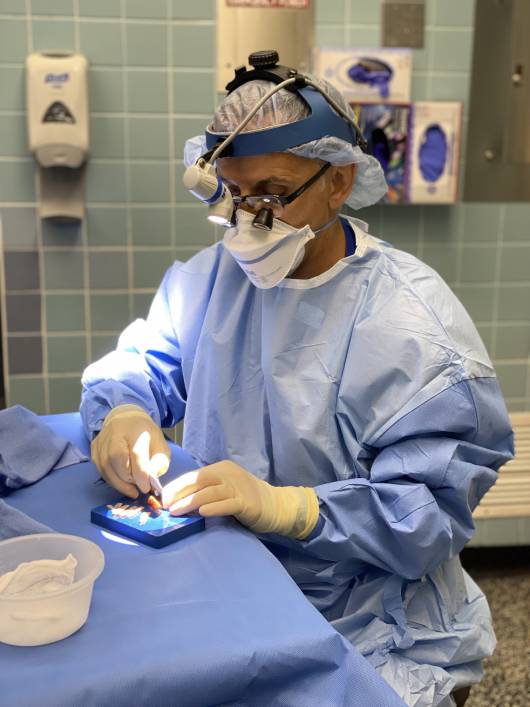
When autologous rib cartilage is selected, the harvest is performed as the precursor step to the rhinoplasty itself:
- Procedure Duration: The rib harvest typically takes approximately one hour
- Donor Site: The sixth or seventh rib from the right side of the chest is most commonly used
- Incision Location: A small incision is placed in a natural skin crease, resulting in a well-hidden scar
- Cartilage Preparation: The harvested rib cartilage is then carved and shaped into the specific grafts needed for the rhinoplasty
- No Visible Donor Site Deformity: The harvest does not produce visible chest deformity or depression at the donor site
- Same-Day Procedure: The rib harvest and rhinoplasty are completed during the same operative session
When Rib Cartilage Rhinoplasty Is Needed
The most common scenarios for rib cartilage rhinoplasty include:
- Revision Rhinoplasty: The most common indication. In failed primary rhinoplasty, too much supporting cartilage is often removed during the original surgery — resulting in a bridge that is too low, a nasal tip that is pinched, or a tip that is excessively upturned. Rib cartilage provides the volume and structural quality needed to restore the lost framework
- Saddle Nose Deformity: Collapse of the middle portion of the nose due to loss of septal support — most commonly seen in patients with autoimmune vascular conditions or in patients with septal perforation from recreational drug use
- Major Traumatic Deformity: Severe nasal injuries from sports, motor vehicle accidents, or assault that have damaged or destroyed the natural cartilaginous support
- Significant Augmentation Needs: Patients requiring substantial bridge augmentation beyond what septum and ear cartilage can provide
- Multiple Previous Surgeries: Patients who have already had cartilage harvested in previous procedures and have insufficient remaining donor material
- Congenital Structural Deficits: Patients with significant congenital deficiencies in nasal cartilage requiring major reconstruction
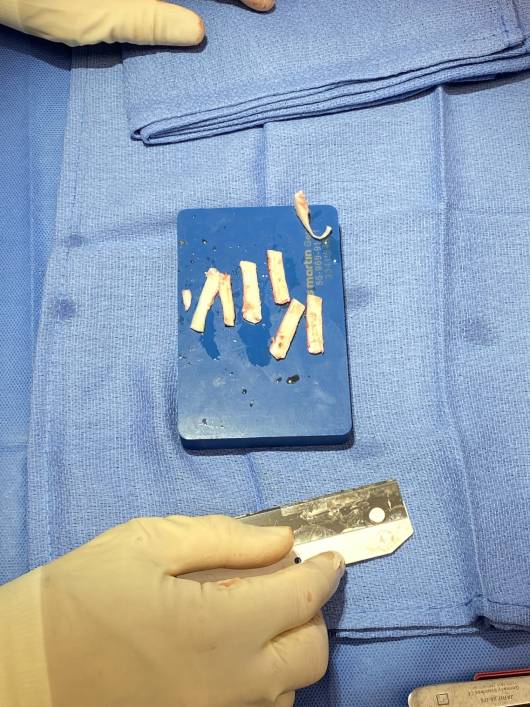
“Rib cartilage rhinoplasty is the most demanding form of nasal surgery. By the time a patient needs rib cartilage, the case is usually complex — multiple previous surgeries, significant traumatic damage, or a structural condition that requires major reconstruction. The harvest itself is straightforward when you have done many of them, but the planning of how to use the harvested cartilage to rebuild the nasal framework is where the case is won or lost.” — Dr. Maurice Khosh
Why Choose Dr. Khosh for Rib Cartilage Rhinoplasty
- Three Decades of Complex Rhinoplasty: Refined experience including reconstructive, revision, and saddle nose cases requiring rib cartilage
- Published Authority on Nasal Valve Anatomy: Author of peer-reviewed research on nasal valve obstruction, foundational anatomy for the structural rebuilding work
- Extensive Autologous Rib Harvest Experience: Refined technique for harvest that minimizes scar and produces no visible donor site deformity
- Thorough Cartilage Source Discussion: Honest discussion of autologous vs. cadaveric trade-offs for each patient’s individual situation
- Functional and Aesthetic Integration: Every plan addresses both structural function and visible appearance
- Dual Board Certification: Combined facial plastic and head and neck surgery expertise
- Park Avenue Convenience: Private Upper East Side practice serving patients from across Manhattan and the tri-state area
Schedule Your Rib Cartilage Rhinoplasty Consultation in NYC
If you are considering rhinoplasty for revision, saddle nose deformity, traumatic deformity, or major reconstruction — and you need a surgeon experienced with both rib cartilage harvest and complex nasal rebuilding — the first step is a thorough consultation evaluating your specific anatomy and surgical goals. Contact us today to schedule a private consultation with Dr. Khosh at his Park Avenue office in New York City, or call (212) 339-9988.
Case Study
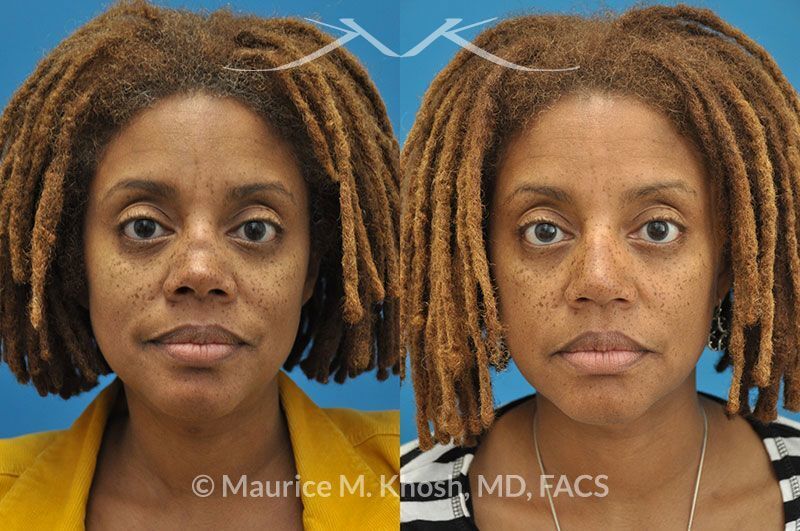
This 35-year-old woman who developed saddle nose collapse due to Wegener’s granulomatosis leading to a septum perforation and loss of nasal bridge support. Autologous rib rhinoplasty allowed the recreation of a natural looking nose with excellent breathing function.
- Patient: 35 year-old man seeking rhinoplasty to address saddle nose deformity in Manhattan
- Problem: Septum perforation with loss of support in bridge of nose.
- Procedure: Autologous rib rhinoplasty performed through the open approach
Disclaimer: These are actual results for patients of Dr. Maurice Khosh. Plastic and cosmetic surgery results can vary between patients.