Teen Rhinoplasty
Although rhinoplasty is one of the most common cosmetic procedures performed on teenagers, the decision to pursue surgery during adolescence requires more careful consideration than rhinoplasty in adult patients. Both the appropriateness of the procedure and the timing of the procedure depend on several factors specific to younger patients — physical development, emotional readiness, family involvement, and clear motivation. When all of these elements are properly evaluated and the teenager is a genuinely good candidate, teen rhinoplasty can be a meaningful procedure for adolescents who have been self-conscious about their nose, who have experienced peer ridicule, or who need correction of breathing issues from traumatic injury or congenital nasal defects. Dr. Maurice Khosh is regularly recognized as a Top New York Facial Plastic Surgeon and an excellent choice for NYC rhinoplasty including teen rhinoplasty performed under conservative, age-appropriate guidelines.
Teen rhinoplasty requires evaluation steps that adult rhinoplasty does not — confirming that the nose has finished growing, assessing the teenager’s emotional readiness and motivation, and ensuring meaningful family involvement throughout the decision-making process. Dr. Khosh’s three decades of rhinoplasty practice include extensive experience with teen rhinoplasty performed under careful clinical guidelines. Dual board-certified by the American Board of Facial Plastic and Reconstructive Surgery and the American Board of Otolaryngology–Head and Neck Surgery and a Fellow of the American College of Surgeons (FACS), Dr. Khosh serves on the AAFPRS Board Examination and Continuing Education Committees and holds hospital privileges at multiple Manhattan-area institutions. He has been recognized as a perennial Castle Connolly Top Doctor and a Best Doctors in America honoree.
When Teen Rhinoplasty Is Appropriate
Teen rhinoplasty is appropriate when several specific conditions are met:
- Nasal Development Complete: The nose has reached adult size and shape, which generally occurs around age 13-14 in girls and 15-16 in boys (though individual variation is significant)
- Stable Motivation: The teenager has expressed consistent, self-driven motivation for the procedure over time — not a sudden or externally pressured decision
- Realistic Expectations: The teen understands what surgery can and cannot accomplish, and is not expecting transformation that the procedure cannot deliver
- Family Involvement and Support: Parents or legal guardians are fully involved in the evaluation, decision-making, and post-surgical care
- Emotional Maturity: The teen demonstrates the emotional maturity to tolerate the recovery process and adjust to the post-surgical result
- Specific, Identifiable Concern: The teen can articulate specific concerns about their nose rather than expressing vague dissatisfaction with their appearance
- No Significant Mental Health Concerns: The teen is not dealing with active body dysmorphic concerns, eating disorders, or other mental health conditions that would make surgery inappropriate
Reasons Teenagers Consider Rhinoplasty
Teen rhinoplasty patients pursue surgery for varied reasons — some primarily functional, some primarily aesthetic, often a combination:
- Functional/Breathing Concerns: Septal deviation, internal nasal valve dysfunction, or post-traumatic deformity affecting breathing
- Congenital Nasal Defects: Birth-related nasal abnormalities that affect appearance, function, or both
- Post-Traumatic Deformity: Nasal injury from sports, falls, or other trauma resulting in visible deformity or functional impairment
- Aesthetic Self-Consciousness: Long-standing self-consciousness about nasal appearance that has affected the teen’s social comfort and self-image
- Peer Ridicule: A history of being teased or bullied about the appearance of the nose
- Family Support for Change: Where the family agrees that the teen would benefit from the procedure
For each motivation, Dr. Khosh conducts the same careful evaluation — confirming that the teen is the right candidate and that the surgery will deliver the expected benefit.
Age and Physical Development Considerations
One of the most important medical considerations in teen rhinoplasty is ensuring the nose has finished growing:
- Why Timing Matters: Operating on a nose that is still growing can produce unpredictable results, and changes the surgeon made could be altered by subsequent growth, potentially requiring revision surgery
- General Guidelines: The nose typically reaches adult size and shape around age 13-14 in girls and 15-16 in boys — though individual variation is significant
- Individual Assessment: Rather than relying solely on age, Dr. Khosh evaluates each teen patient’s specific nasal development through examination of the septum, nasal bones, and cartilage
- When in Doubt, Wait: For borderline cases where nasal development is not clearly complete, the conservative approach is to wait several months and reassess rather than risk operating prematurely
- Functional Surgery Exception: For functional indications affecting breathing or following nasal trauma, surgical timing may be different and is evaluated case-by-case
The Teen Rhinoplasty Consultation Process
The consultation for teen rhinoplasty involves both the teen and their parents or legal guardians throughout:
- Joint Initial Conversation: Dr. Khosh meets with both the teen and the parents/guardians together to discuss reasons for considering surgery and overall expectations
- Private Conversation with the Teen: A separate conversation with the teen alone to ensure their motivation is self-driven and their expectations are realistic
- Physical Examination: Comprehensive evaluation of nasal development, breathing function, and the specific features the teen wants addressed
- Computer Imaging: When appropriate, computer imaging to demonstrate potential surgical outcomes and facilitate discussion of what is achievable
- Honest Candidacy Discussion: Frank conversation about whether the teen is a good candidate now, would be a better candidate later, or might benefit from non-surgical approaches
- Comprehensive Risk Discussion: Detailed discussion of surgical risks, recovery expectations, and post-surgical limitations — including restrictions on contact sports and other activities
- Family Decision Time: Encouragement for the family to take time to discuss the decision before scheduling surgery — there is no pressure to commit during the consultation
“The most important conversation in teen rhinoplasty is often the one that isn’t about surgery at all — it’s the conversation about whether surgery is the right answer right now. Some teens are clearly good candidates and benefit substantially. Others are too young, or motivated by reasons that surgery won’t address, or would benefit from waiting until they’re emotionally more settled. My job is to give the family an honest assessment of which situation we’re in — and to be willing to recommend against surgery when that’s the right answer.” — Dr. Maurice Khosh
Emotional and Psychological Readiness
Emotional readiness for teen rhinoplasty is just as important as physical readiness:
- Self-Driven Decision: The motivation should come from the teen themselves, not from family pressure or external influence
- Stability of Concern: The desire for surgery should have been consistent over time rather than emerging suddenly
- Body Image Health: The teen should have generally healthy body image, even if there is one specific feature they want to change
- Realistic Surgical Expectations: Understanding that surgery will improve a specific feature but won’t transform overall life experience
- Mental Health Status: No active mental health concerns that would make this an inappropriate time for surgery
- Capacity for Postoperative Care: The teen should be able to follow postoperative instructions and tolerate the recovery process
Risks and Considerations for Teen Patients
Teen rhinoplasty carries the same surgical risks as adult rhinoplasty, with several specific considerations:
- Standard Surgical Risks: Bleeding, infection, asymmetry, unsatisfactory result, and the need for possible revision
- Contact Sports Restriction: Patients must avoid contact sports for approximately six to eight weeks after surgery to prevent damage to the healing nose; longer for patients who play vigorous contact sports
- School Disruption: Recovery typically requires 7-10 days away from school and longer for physical education
- Long-Term Sport Considerations: Teens who play contact sports should understand that future injuries could affect the surgical result
- Result Permanence: Decisions made at age 15 will affect the patient’s appearance throughout life — the conversation about long-term considerations is important
- Possible Revision Need: Approximately 10-15% of rhinoplasty patients (across all ages) eventually consider revision surgery; this percentage applies to teen patients as well
Recovery and Return to Activities
Teen rhinoplasty recovery typically follows this timeline:
- First Week: External splint in place, most pronounced bruising and swelling, generally home from school
- Splint Removal: At approximately one week, the external splint is removed
- Return to School: Most teens return to school 7-10 days after surgery with visible but tolerable residual bruising
- Physical Education Restriction: Avoidance of physical education and athletic activity for approximately three to four weeks
- Contact Sports Restriction: Six to eight weeks minimum, often longer for vigorous contact sports — discussed individually with each patient
- Final Result: Progressive refinement of the result over the following 12-18 months as tip swelling resolves
Scheduling surgery during school breaks (summer, winter break) is generally advised to minimize disruption.
Why Choose Dr. Khosh for Teen Rhinoplasty
- Three Decades of Rhinoplasty Experience: Refined experience including teen rhinoplasty performed under careful clinical guidelines
- Conservative, Age-Appropriate Approach: Honest evaluation of whether each teen is a candidate at this point in development, with willingness to recommend waiting when appropriate
- Family-Inclusive Consultation Process: Both the teen and the family fully involved throughout the decision and care
- AAFPRS Board Examination/CE Committee Member: Academic engagement reflecting standing in the specialty
- Functional and Aesthetic Integration: Every plan addresses both appearance concerns and breathing function
- Hospital Privileges at Multiple Manhattan Institutions: Access to accredited surgical facilities for procedures
- Dual Board Certification: Combined facial plastic and head and neck surgery expertise
- Park Avenue Convenience: Private Upper East Side practice serving patients from across Manhattan and the tri-state area
Schedule a Teen Rhinoplasty Consultation in NYC
If your teen is considering rhinoplasty and you would like a thorough, honest evaluation of whether the procedure is appropriate at this point — and which approach would best deliver the result your teen is hoping for — the first step is a private consultation. Both the teen and at least one parent or legal guardian should attend the consultation together. Contact our office in Manhattan today to schedule a consultation with Dr. Khosh, or call (212) 339-9988. Recovery requires at least 10 days at minimum, so scheduling surgery during school breaks is generally advised.
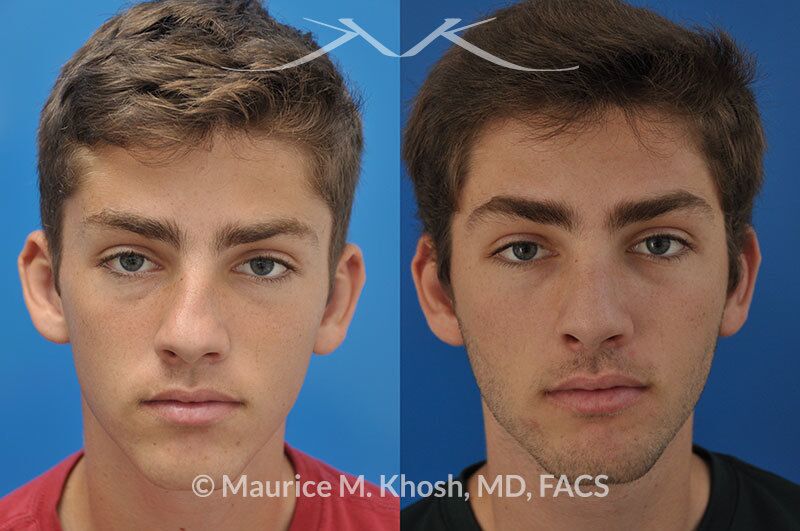
Case Study
Disclaimer: These are actual results for patients of Dr. Maurice Khosh. Plastic and cosmetic surgery results can vary between patients.