Rhinophyma Treatment in NYC
Rhinophyma is a skin condition affecting the nose that develops as a late-stage form of acne rosacea. Often referred to as a “bulbous nose,” rhinophyma produces a larger, irregular, bumpy enlargement that typically affects the lower half of the nose — the tip and surrounding nostril region. The condition usually develops over years of progressive rosacea, beginning with overactive sebaceous (oil) gland production, gradual enlargement of the pores, and progressive thickening of the nasal skin. While early-stage rhinophyma can often be managed with skincare, topical medications, and antibiotics, advanced cases produce visible nasal disfigurement that typically requires surgical or laser intervention. Rhinophyma treatment is one of the procedures within rhinoplasty and nose reshaping at Dr. Khosh’s Park Avenue practice in New York City.
Rhinophyma is a condition that doesn’t fit neatly into a single medical specialty — it begins as a dermatologic condition (rosacea), progresses into a disfiguring nasal disorder, and requires both surgical and laser techniques to treat in its advanced stages. Dr. Maurice Khosh’s three decades of nasal surgery practice include extensive experience with rhinophyma at every stage. Dual board-certified — including by the American Board of Otolaryngology–Head and Neck Surgery, the specialty most directly concerned with cutaneous disorders of the head and neck — Dr. Khosh is a Fellow of the American College of Surgeons (FACS). He has been recognized as a perennial Castle Connolly Top Doctor and a New York Magazine Best Doctor in Facial Plastic Surgery.
What Is Rhinophyma? Understanding the Condition
Rhinophyma is the most advanced stage of acne rosacea, characterized by progressive enlargement and thickening of the nasal skin. The condition develops through several distinct phases:
- Early Rosacea: Persistent facial redness, visible blood vessels, and rosacea-related rashes affecting the nose, cheeks, and forehead
- Sebaceous Gland Hyperplasia: Gradual overproduction by the oil glands in the nasal skin
- Pore Enlargement: Progressive widening of the skin pores, particularly across the lower nose
- Skin Thickening: Gradual thickening and irregular textural changes in the nasal skin
- Bulbous Enlargement: Visible nasal enlargement and distortion as the thickened tissue accumulates
- Severe Deformity: In advanced cases, significant disfigurement of the nose with deep pores, irregular surface, and altered nasal shape
Rhinophyma typically takes years or decades to progress from early rosacea to the more advanced disfiguring stages, though the rate of progression varies significantly between patients.
Causes and Risk Factors for Rhinophyma
The underlying cause of rhinophyma remains incompletely understood. Several factors are associated with the condition:
- Underlying Rosacea: Rhinophyma develops only in patients with rosacea, though most rosacea patients never progress to rhinophyma
- Male Sex: The condition is significantly more common in men than in women
- Mid-Life Onset: Rhinophyma typically begins between 30 and 50 years of age
- Genetic Predisposition: A family history of rosacea or rhinophyma increases risk
- Skin Type: Fair-skinned individuals of Northern European descent are most commonly affected
A note on alcohol consumption: rhinophyma was historically and incorrectly linked to heavy alcohol use, leading to longstanding stigma around the condition. This connection has been medically discarded. Rhinophyma is not caused by alcohol consumption — it is a genuine medical condition that affects patients regardless of their drinking habits.
Early-Stage Rhinophyma Treatment Options
When rhinophyma is identified in its early stages, several conservative treatment options may slow progression or improve appearance:
- Topical Medications: Prescription topical antibiotics and anti-inflammatory medications targeting the underlying rosacea
- Oral Antibiotics: Long-term low-dose oral antibiotics (typically doxycycline or related medications) to control inflammation
- Skincare Modifications: Gentle cleansing routines and avoidance of triggers that worsen rosacea (sun exposure, spicy foods, extreme temperatures, alcohol for some patients)
- Light-Based Therapies: Intense pulsed light (IPL) or laser treatments targeting the underlying rosacea blood vessels
- Topical Vasoconstrictors: Newer prescription topical products that reduce facial redness
These treatments are most effective when started early. Once significant skin thickening and bulbous enlargement have developed, conservative treatment is unlikely to reverse the changes — surgical or laser intervention typically becomes necessary.
Surgical and Laser Treatment for Advanced Rhinophyma
For patients with established rhinophyma producing visible nasal disfigurement, several surgical and laser techniques can effectively reshape the nose:
- CO2 Laser Resurfacing: A precisely controlled CO2 laser is used to vaporize the thickened, sebaceous skin in layers — sculpting the nose back toward its normal contour while controlling depth precisely
- Electrocautery or Electrosurgery: Electrical instruments used to remove the thickened tissue under careful control
- Sharp Surgical Excision: Direct surgical removal of thickened tissue using a scalpel, often used in combination with laser or electrocautery for specific portions of the procedure
- Dermabrasion: Mechanical resurfacing to refine the skin surface after primary tissue removal
- Combined Approaches: Most advanced rhinophyma cases benefit from a combination of techniques used together to address different aspects of the condition
- Reconstruction When Needed: In the most severe cases involving significant nasal architectural changes, additional reconstructive techniques may be required to restore normal nasal shape
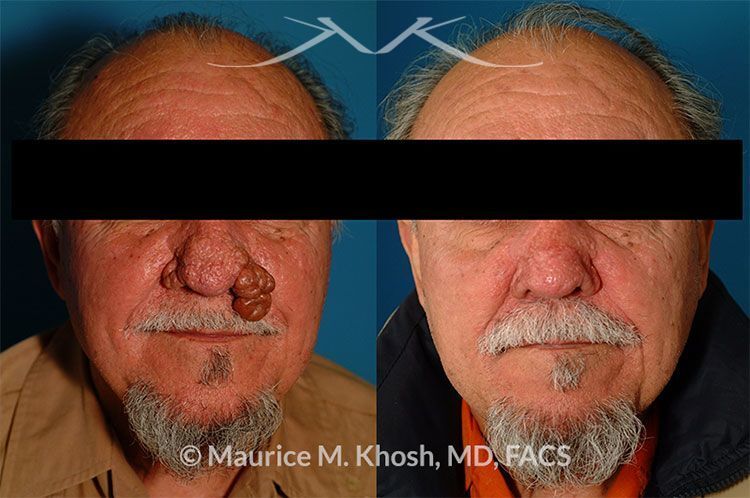
Case Study
This 68 year old gentleman requested rhinoplasty in to address a large rhinophyma which was causing a profound deformity of his nasal tip. CO2 laser was used to shave the abnormally enlarged sebaceous skin of the nose in the tip and nostril region.
- Patient: 68 year old gentleman who was interested in rhinoplasty in New York
- Problem: Excess thickening of the skin of the nose in the tip and nostril region
- Procedure: Rhinoplasty utilizing the CO2 laser to reshape the skin of the nose
Disclaimer: These are actual results for patients of Dr. Maurice Khosh. Plastic and cosmetic surgery results can vary between patients.
“Rhinophyma is one of those conditions where patients have often lived with the appearance and the social discomfort for years before seeking treatment — partly because the older misunderstanding linking it to alcohol use led to embarrassment about the condition itself. The treatment is more straightforward than most patients expect, and the visible improvement after a single procedure can be dramatic. The most important conversation in the consultation is often correcting that historical stigma — rhinophyma is a medical condition, not a lifestyle issue, and it deserves treatment without judgment.” — Dr. Maurice Khosh
Rhinophyma Treatment Recovery
Rhinophyma treatment is typically performed under local anesthesia with sedation, or under general anesthesia for more extensive cases. The procedure duration varies with the extent of the rhinophyma — typically 30 to 90 minutes. Patients return home the same day. The treated nasal skin will be raw initially, similar to a deep abrasion, and requires careful wound care during the healing period. Patients typically experience some discomfort, mild swelling, and a crusting/peeling phase as the new skin layer emerges over the first one to two weeks. Most patients return to non-physical work within seven to ten days, though they may have some visible pink or red coloration during this period that gradually fades. Full skin recovery and final color normalization typically takes one to three months.
Important Considerations After Treatment
To maintain the result and prevent recurrence:
- Ongoing Rosacea Management: Continued treatment of the underlying rosacea with appropriate topical or oral medication is essential to prevent recurrence
- Sun Protection: Daily sunscreen and sun avoidance to prevent worsening of rosacea
- Avoid Known Triggers: Identifying and avoiding individual triggers (spicy foods, extreme heat, certain alcohols for some patients)
- Regular Dermatologic Follow-Up: Ongoing care with a dermatologist for long-term rosacea management
- Periodic Touch-Up Treatments: Some patients benefit from periodic maintenance treatments to address any minor recurrence
Why Choose Dr. Khosh for Rhinophyma Treatment
- Three Decades of Nasal Surgery: Refined experience treating rhinophyma at every stage from early to advanced
- Head-and-Neck Surgical Foundation: Board certification specifically in cutaneous and structural disorders of the head and neck
- Multi-Modality Treatment Capability: CO2 laser, electrocautery, surgical excision, and combination approaches all available
- Functional and Aesthetic Integration: Treatment addresses both the visible appearance and the underlying nasal anatomy
- Sensitive Patient Approach: Understanding of the social and psychological impact of rhinophyma, with care for patients who have lived with stigma
- Dual Board Certification: Combined facial plastic and head and neck surgery expertise
- Park Avenue Convenience: Private Upper East Side practice serving patients from across Manhattan and the tri-state area
Schedule Your Rhinophyma Consultation in NYC
If you have been living with rhinophyma — whether early or advanced — and want to explore the available treatment options, the first step is a thorough evaluation of the condition’s stage and severity, along with a discussion of which treatment approach will best deliver the result you want. Contact us today to schedule a private consultation with Dr. Khosh at his Park Avenue office in New York City, or call (212) 339-9988.